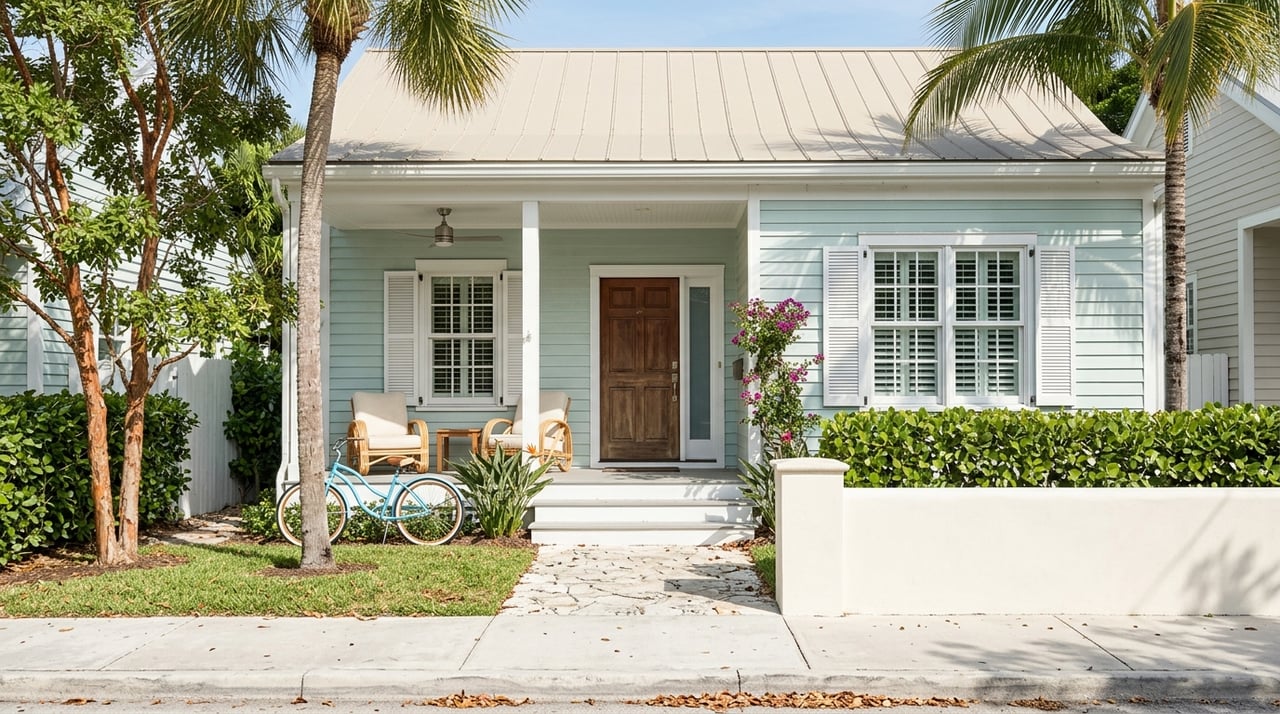
Dreaming about Key West is easy. Living here every day is where the real questions start. If you are thinking about a move, a second home, or a full-time island lifestyle, it helps to understand what daily life actually looks like beyond the postcard moments. In this guide, you will get a clear, practical picture of how people get around, what the seasons feel like, what shapes the community, and what future residents should plan for. Let’s dive in.
What daily life feels like in Key West
Key West is small in a way that changes your routine. The city has an estimated 24,999 residents in 2025 and just 5.60 square miles of land, which helps explain why daily life often feels local, close by, and easy to navigate. The mean travel time to work is 14.8 minutes, which is a very different rhythm from many mainland markets.
For you, that can mean less time spent commuting and more time enjoying the parts of island life that drew you here in the first place. Errands, meals out, waterfront time, and neighborhood routines can all happen within a compact footprint. That smaller scale is one of the biggest reasons Key West feels distinct from larger Florida cities.
Getting around Key West
Many buyers ask the same question first: do you need a car in Key West? The practical answer is not always. The city actively promotes a car-light lifestyle through Car Free Key West, with support for biking, walking, and public transportation.
Key West currently offers fixed-route service, the Duval Loop, and Key West Rides on-demand bus service. Public transit also serves Key West, Stock Island, the Lower Keys, and Marathon, and it runs seven days a week except Thanksgiving, Christmas, and New Year’s Day. If you are 60 or older and live in Key West, city routes are free with ID.
That said, a car can still be useful depending on your routine. If you plan to travel often across the Keys, run larger errands, or keep a schedule that stretches beyond the island core, you may still want one. The city also notes that buses can be delayed during heavy seasonal traffic, so flexibility matters.
A car-light lifestyle is realistic
For many residents, walking or biking becomes part of everyday living. On a compact island, the distance between home, coffee, dinner, the waterfront, and basic errands can be surprisingly manageable. That shapes not just transportation, but the whole pace of the day.
If you are moving from a place where driving is required for everything, this can feel like a major lifestyle shift. It is one of the reasons many buyers describe Key West as easier, more social, and more connected once they settle in.
Weather shapes the island rhythm
Key West has a mild, tropical-maritime climate, and that affects daily life all year long. According to NOAA, December through April is the dry season, June through October is the wet season, and May and November are transition months. Annual normals include an average maximum temperature of 83.7 degrees, an average temperature of 78.9 degrees, an average minimum temperature of 74.0 degrees, and 40.44 inches of rainfall.
In simple terms, you are not getting four mainland-style seasons here. You are living with a drier, cooler stretch in winter and a warmer, wetter stretch in summer. That seasonal pattern influences everything from how often you dine outdoors to when you plan errands, boating days, and home maintenance.
The numbers help make that real. Materials for the Key West Airport show January highs around 75 degrees and August highs around 90 degrees. If you are relocating from the Northeast or another temperate market, that difference will shape your routines quickly.
What summer feels like
Summer in Key West is hot, humid, and wetter, with frequent thunderstorms. That does not mean daily life stops, but it does mean you learn to plan around changing weather. Morning outings, flexible afternoon plans, and storm awareness become part of the normal rhythm.
Humidity, mosquitoes, and subtropical maintenance are also part of the tradeoff. Official visitor safety guidance recommends removing standing water, using repellent, and keeping window screens in good shape. These are small things, but they are part of living comfortably on the island.
Storm readiness is part of island living
One of the most important practical realities of Key West life is hurricane preparedness. NOAA and National Park Service materials note that the Atlantic hurricane season runs from June 1 through November 30. City guidance tells residents to sign up for emergency alerts, maintain an evacuation plan, and keep a hurricane kit that can support the household for at least seven days if roads are blocked or power and water are lost.
For many future residents, this sounds intimidating at first. In practice, it becomes part of how you live responsibly in the Keys. You plan ahead, secure outdoor items, understand your property, and treat storm prep as a normal part of homeownership or seasonal residency.
This is one area where local guidance matters. If you are considering a move to Key West, it helps to work with someone who can explain how storm planning connects to real day-to-day ownership decisions.
Community life goes beyond the view
Key West is known for scenery, but everyday island living is also shaped by community traditions. One of the strongest local themes is the city’s official One Human Family philosophy, which the city describes as a statement of unity, equality, and diversity. That message helps explain why many residents experience Key West as a place with a strong local identity, not just a destination.
The most visible daily ritual may be the Sunset Celebration at Mallory Square. Official Florida Keys tourism materials describe it as a nightly gathering with local artists and performers, making sunset part of the social calendar. In Key West, the end of the day is often something people share rather than just something they see.
Festivals become part of resident life
Key West also has a dense event calendar that spills into everyday living. Fantasy Fest began in 1979 as a way to energize the island during a quieter season and has grown into a 10-day October tradition. Conch Republic Days and Hemingway Days are also established annual events that add another layer to the island’s identity.
For residents, these traditions can be fun, memorable, and energizing. They also shape traffic, pace, parking, and the seasonal feel of different parts of town. If you are thinking about buying here, it is helpful to understand not just that events happen, but how they influence the flow of local life.
Water access is part of the lifestyle
Water is woven into daily life in Key West. The city says there are many local beaches around the island, and while the public sandy areas are modest, they are popular. The water is often calm and shallow enough for relaxing or paddleboarding, which gives residents an easy way to enjoy the outdoors without needing a major day trip.
For buyers, this matters because island living is not only about owning near the water. It is also about how often you can actually use it. In Key West, water access tends to be part of the weekly rhythm, whether that means a beach stop, time on a paddleboard, or simply ending the day by the shoreline.
At the same time, the marine environment comes with stewardship and rules. NOAA notes that the Florida Keys National Marine Sanctuary sets regulations for boating and fishing, so it is important to understand that access and responsibility go together.
The cost of living in Key West
Lifestyle is a major draw, but buyers also need clear expectations about cost. Census QuickFacts shows a median owner-occupied home value of $852,400, a median gross rent of $2,220, and an owner-occupied housing rate of 49.2 percent for the 2020 to 2024 ACS period. Those figures place Key West firmly in the category of a premium lifestyle market.
That does not mean the market is one-size-fits-all. It does mean you should approach your search with a realistic view of pricing, goals, and tradeoffs. Whether you are considering a condo, single-family home, duplex opportunity, or second home, understanding everyday costs is just as important as loving the island atmosphere.
What this means for buyers
If you are considering Key West, the biggest takeaway is that everyday life here is both beautiful and practical. You may be able to live more locally, commute less, and spend more time outdoors, but you also need to be comfortable with weather planning, humidity, storm readiness, and premium housing costs.
That combination is exactly what makes Key West unique. It is not suburban, and it is not just a resort backdrop. It is a real community with a distinct pace, a strong sense of place, and routines shaped by the water, the weather, and the people who call it home.
If you are exploring what island life could look like for you, having a guide with real local context can make the process much clearer. When you are ready to talk through neighborhoods, lifestyle fit, or the practical side of buying in the Keys, connect with Joyce Craul.
FAQs
Do you need a car to live in Key West?
- Not necessarily. Key West supports a car-light lifestyle through walking, biking, fixed-route transit, the Duval Loop, and on-demand bus service, although a car may still be useful depending on your routine.
What does summer weather feel like in Key West?
- Summer in Key West is typically hot, humid, and wetter, with frequent thunderstorms during the wet season from June through October.
What makes Key West feel like a community and not just a tourist destination?
- Everyday life is shaped by the city’s One Human Family philosophy, recurring traditions like Sunset Celebration, and annual events such as Fantasy Fest, Conch Republic Days, and Hemingway Days.
What should buyers know about hurricane season in Key West?
- Hurricane season runs from June 1 through November 30, and residents are encouraged to sign up for alerts, keep an evacuation plan, and maintain a seven-day storm kit.
How expensive is housing in Key West?
- Census data shows a median owner-occupied home value of $852,400 and a median gross rent of $2,220, reflecting Key West’s status as a premium lifestyle market.
What is everyday beach and water access like in Key West?
- The city says local beaches are modest but popular, and the calm, shallow water often supports relaxing and activities like paddleboarding.