Trying to choose between a condo and a cottage in Key West? It sounds simple until you realize you are not just comparing floor plans or price points. In Key West, your choice can affect maintenance, privacy, insurance questions, rental flexibility, and even what changes you can make to the property. If you want a clearer way to think through the tradeoffs, you are in the right place. Let’s dive in.
Why this choice feels different in Key West
Key West is not a typical coastal market. Much of the city falls within historic preservation territory, and the city notes that every district beginning with “H” is part of the historic district, except HDR on the east side of the island. That matters because the Historic Architectural Review Commission, or HARC, oversees the preservation and appearance of historic preservation districts, along with individually listed historic properties and contributing buildings.
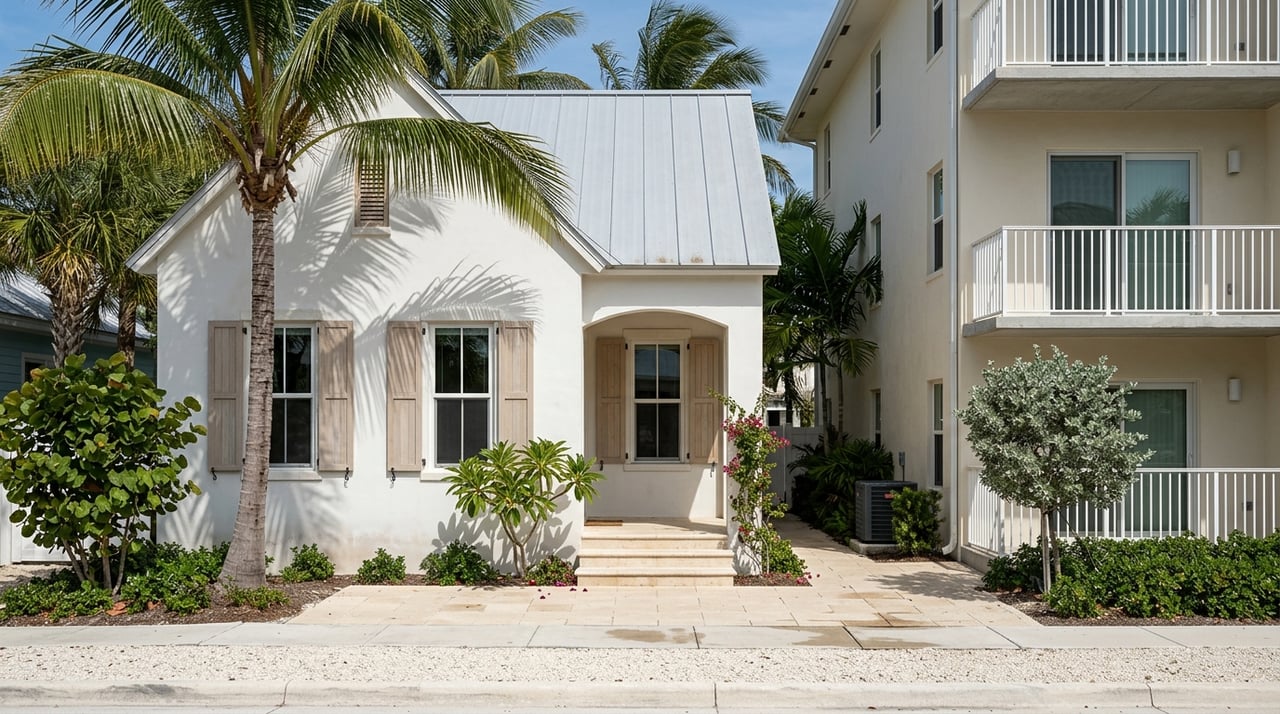
That local context shapes what many buyers mean when they say “cottage.” In Key West, a cottage often refers to an older detached home with historic character, not just a small house. City guidelines describe traditional Key West cottages as one-story, one-room-wide wood houses with features like porches, shutters, and roof openings for ventilation.
So when you compare condos versus cottages here, you are often comparing two very different ownership experiences. One leans toward shared systems and shared rules. The other usually brings more independence, along with more direct responsibility.
Condo ownership in Key West
A condo can be a strong fit if you want simpler day-to-day upkeep. Under Florida law, the condominium association is responsible for maintaining, repairing, and replacing the condominium property it controls under the declaration. In practical terms, that often means less direct exterior maintenance on your shoulders.
That convenience comes with shared governance. Florida law also gives the association an irrevocable right of access to units when needed for maintenance or to prevent damage. If you value a lock-and-leave lifestyle, that tradeoff may feel reasonable.
Before you buy a condo, the documents matter. Florida requires a prospectus or offering circular that explains items like voting rights, unit-use restrictions, leasing restrictions, assessment amounts, and fees for commonly used facilities. The Florida Department of Business and Professional Regulation also says inspection reports and reserve studies are part of the association’s official records and must be provided to potential purchasers.
What condo living often offers
- Less direct responsibility for exterior upkeep
- A more lock-and-leave ownership style
- Shared decision-making through the association
- Rules and restrictions that can affect use and leasing
- Potential exposure to assessments tied to building expenses
Cottage ownership in Key West
A cottage usually offers a different kind of appeal. You may have more privacy, more control over the property, and a stronger sense of owning a distinct piece of Key West architecture. For many buyers, that historic character is part of the dream.
At the same time, the upkeep burden is more direct. As a detached homeowner, you are generally responsible for repairs and maintenance, along with property taxes and insurance. That can range from routine fixes to larger projects like roof work.
In Key West, exterior changes may involve an additional layer of review. HARC rules cover certificates of appropriateness for changes to the external appearance of existing structures, new construction, and demolition within historic preservation zones and the National Register historic district. The city also notes that additions must meet zoning standards and, when HARC applies, the Historic Architectural Design Guidelines.
What cottage ownership often involves
- More privacy and autonomy
- More direct responsibility for repairs and maintenance
- Possible HARC review for exterior work
- More hands-on management of the property over time
- A distinct historic or architectural identity in many cases
Maintenance, control, and privacy
If you want the shortest version of this comparison, it comes down to who handles what. With a condo, much of the exterior and common-area responsibility sits with the association. With a cottage, that responsibility is usually yours.
Control follows the same pattern. Condo ownership often means more oversight from association rules and processes. Cottage ownership usually gives you more independence, but in Key West that independence can still be shaped by zoning and historic review requirements.
Privacy is another common deciding factor. A detached cottage often gives you more separation and a stronger sense of personal space. A condo may offer easier ownership, but it usually comes with closer proximity to neighbors and more shared systems.
Insurance and flood questions to weigh
Insurance deserves close attention no matter which property type you choose. Florida guidance says condo unit owners typically need an HO-6 policy, which mainly covers the unit owner’s personal property and liability. The same guidance says condo associations may assess owners for damage to commonly owned areas if the association’s policy or reserves do not fully cover the cost.
That is why condo buyers need to understand the master policy. Florida consumer guidance says you should know exactly what the association’s policy covers before you buy. A condo that seems easier to own can still carry financial risk through reserve shortfalls or loss assessments.
Flood is a major part of due diligence in Monroe County. The county notes that low elevations can be inundated during major storms, encourages residents to check flood zones, and recommends consulting floodplain officials before construction projects. Florida consumer guidance also says most homeowners policies exclude flood damage, and flood coverage is usually separate.
For financed purchases in higher-risk flood areas, flood insurance may be required by the lender. That matters whether you are buying a condo or a cottage. Even a well-kept, move-in-ready property needs to be evaluated in light of flood exposure and insurance costs.
Condo financial risk versus cottage responsibility
A condo can reduce your direct maintenance workload, but it can shift some risk into the association’s budget. Florida’s condo rules include building-safety and reserve-funding obligations that can affect ownership costs, especially in certain buildings. The DBPR says Structural Integrity Reserve Studies are required for condominium and cooperative buildings that are three stories or higher, completed at least every 10 years, and that milestone inspections apply to buildings of a certain age depending on coastline distance.
If reserve funding is not adequate, an association may need special assessments or financing. That is a key issue to review before you buy. It does not mean a condo is the wrong choice, but it does mean the financial picture goes beyond the monthly fee.
A cottage typically avoids the condo-specific reserve and milestone-inspection framework. Still, that does not mean ownership is simpler. Instead, the responsibility for repairs, planning, and budgeting is more direct and personal.
Rental rules can shape your decision
In Key West, intended use matters as much as property type. The city says property use is determined by zoning, and transient rental use is allowed only in specific districts. The city’s FAQ divides residential rentals into non-transient rentals of 29 days or more and transient rentals of 28 days or less.
The same city guidance says there are very few historic-district zoning districts that allow transient use, along with strict off-street parking and density requirements. In other words, you should not assume you can buy either a condo or a cottage and later use it as a vacation rental. That question needs a property-specific zoning review.
This is especially important for second-home buyers and small investors. A condo may seem like the easier rental option, and a cottage may seem more appealing to guests, but the deciding factor is often zoning and allowed use, not just the property style.
Which option may fit you best
A condo may be the better fit if you want easier upkeep, a more flexible lock-and-leave lifestyle, and less direct responsibility for exterior maintenance. This can be especially appealing if you are buying from out of state or planning to split time between Key West and another home.
A cottage may be the better fit if you care most about privacy, autonomy, and historic island character. If you enjoy having more control over your property and understand that upkeep and review processes may require more hands-on attention, a cottage can be deeply rewarding.
Neither option is automatically better. In Key West, the smartest choice depends on how you plan to use the property, how much maintenance responsibility you want, how comfortable you are with shared governance, and whether zoning or historic-review rules could affect your plans.
When you look at properties through that lens, the decision usually becomes much clearer. And that is where local guidance can make a real difference.
If you are weighing condos versus cottages in Key West, Joyce Craul can help you sort through the lifestyle, zoning, insurance, and ownership details so you can move forward with confidence.
FAQs
What is the main difference between a condo and a cottage in Key West?
- In Key West, a condo usually means shared maintenance and association rules, while a cottage usually means a detached home with more privacy, more control, and more direct upkeep responsibility.
What does historic district review mean for a Key West cottage?
- If a cottage is under HARC jurisdiction, exterior changes, additions, new construction, or demolition may require review under the city’s historic preservation rules and design guidelines.
What should you review before buying a Key West condo?
- You should review the condo documents closely, including voting rights, unit-use restrictions, leasing restrictions, assessment history, fees, inspection reports, reserve studies, and what the association’s master insurance policy covers.
How do flood concerns affect Key West condos and cottages?
- Flood exposure matters for both property types because Monroe County has low-lying areas vulnerable during major storms, most homeowners policies exclude flood damage, and some financed purchases in higher-risk flood areas may require flood insurance.
Can you use any condo or cottage in Key West as a short-term rental?
- No. In Key West, transient rental use is allowed only in certain zoning districts, and the city says there are very few historic-district zoning districts that allow it, with strict parking and density requirements.
Is a Key West condo always less expensive to own than a cottage?
- Not necessarily. A condo may reduce direct exterior maintenance, but ownership costs can also include association fees, reserve funding needs, and possible special assessments, while a cottage places more repair and maintenance costs directly on you.